Introduction
Over the past three decades, the United States has witnessed a profound transformation in how food is produced, marketed, and consumed. Among the most influential shifts is the rapid growth of “bio food”, a term commonly used to describe organic food, biotechnology-enhanced food, and biologically sustainable food systems. From small farmers’ markets to the largest supermarket chains, bio food has become a core part of the American food landscape.
What began as a niche movement in the 1990s has evolved into a multi-billion-dollar industry that shapes consumer behavior, environmental policy, healthcare discussions, and global trade. Today, millions of Americans choose bio food for reasons ranging from health and nutrition to environmental protection and ethical farming.
This article explores the evolution, current state, benefits, challenges, economic impact, and future of bio food in the United States.
1. Understanding “Bio Food” in the U.S. Context
In the United States, “bio food” broadly refers to two major categories:
- Organic Food (USDA Certified Organic)
- Biotechnology-Based Food (including GMO and bioengineered food)
Organic Food
Organic food follows strict agricultural standards established by the United States Department of Agriculture (USDA). These standards prohibit:
- Synthetic pesticides and herbicides
- Chemical fertilizers
- Antibiotics and growth hormones
- Genetically modified organisms (GMOs)
Organic farming promotes:
- Soil health
- Biodiversity
- Animal welfare
- Environmental sustainability
Biotechnology-Based Food
Biotechnology in food includes genetically engineered crops (GMOs) designed to:
- Resist pests
- Tolerate drought
- Improve nutritional value
- Increase agricultural productivity
While organic food prohibits GMOs, biotechnology focuses on scientific innovation to improve food security.
In the USA, both approaches coexist and shape the national food system.
2. Historical Evolution of Bio Food in the USA
The 1990s: The Birth of the Organic Movement
In the early 1990s, organic farming was still a marginal activity. The movement grew from:
- Environmental activism
- Health consciousness
- Small-scale sustainable farming
In 1990, the U.S. Congress passed the Organic Foods Production Act, leading to the creation of national organic standards.
The 2000s: Mainstream Adoption
By the early 2000s:
- Major retailers like Whole Foods, Trader Joe’s, and Costco entered the organic market
- Fast-food chains introduced organic ingredients
- Public awareness of pesticides and food safety increased
The 2010s: Bio Food Becomes a Lifestyle
Organic food became part of a broader lifestyle including:
- Fitness
- Vegan and plant-based diets
- Eco-friendly living
At the same time, GMO crops expanded rapidly in corn, soybeans, cotton, and canola.
3. Current Market Size and Economic Impact
Organic Food Market Value
As of the early 2020s, the U.S. organic food industry exceeds $60 billion annually, making the USA the largest organic food market in the world.
Key sectors include:
- Organic fruits and vegetables
- Organic dairy products
- Organic meat and poultry
- Packaged organic foods
- Organic baby food
Biotechnology Market Value
More than 90% of U.S. corn and soybeans are genetically engineered. These crops serve as the foundation for:
- Animal feed
- Processed food
- Biofuels
- Pharmaceutical ingredients
The biotechnology food sector contributes hundreds of billions of dollars to U.S. agriculture and exports.
4. Why Americans Choose Bio Food
1. Health and Nutrition
Many consumers believe bio food is:
- Free from harmful chemicals
- More nutritious
- Better for digestion
- Safer for children and pregnant women
Although scientific results vary, perceived health benefits strongly drive demand.
2. Environmental Protection
Organic farming:
- Reduces chemical runoff into rivers
- Protects pollinators like bees
- Improves soil carbon storage
- Reduces air and water pollution
Many Americans choose organic to reduce their ecological footprint.
3. Ethical and Animal Welfare Concerns
Organic livestock standards ensure:
- Access to open air
- Natural diets
- Prohibition of routine antibiotics
Consumers increasingly care about how animals are treated.
4. Food Safety and Transparency
Food scandals and pesticide exposure reports have made Americans demand:
- Full traceability
- Clean labels
- Transparent sourcing
5. Bio Food in American Households
Urban vs Rural Consumption
- Urban areas show higher organic food adoption
- Rural families rely more on conventional farming but increasingly produce their own bio food
Income Level and Education
- Higher-income households purchase more organic food regularly
- College-educated consumers are more likely to trust sustainability labels
Popular Bio Food Products
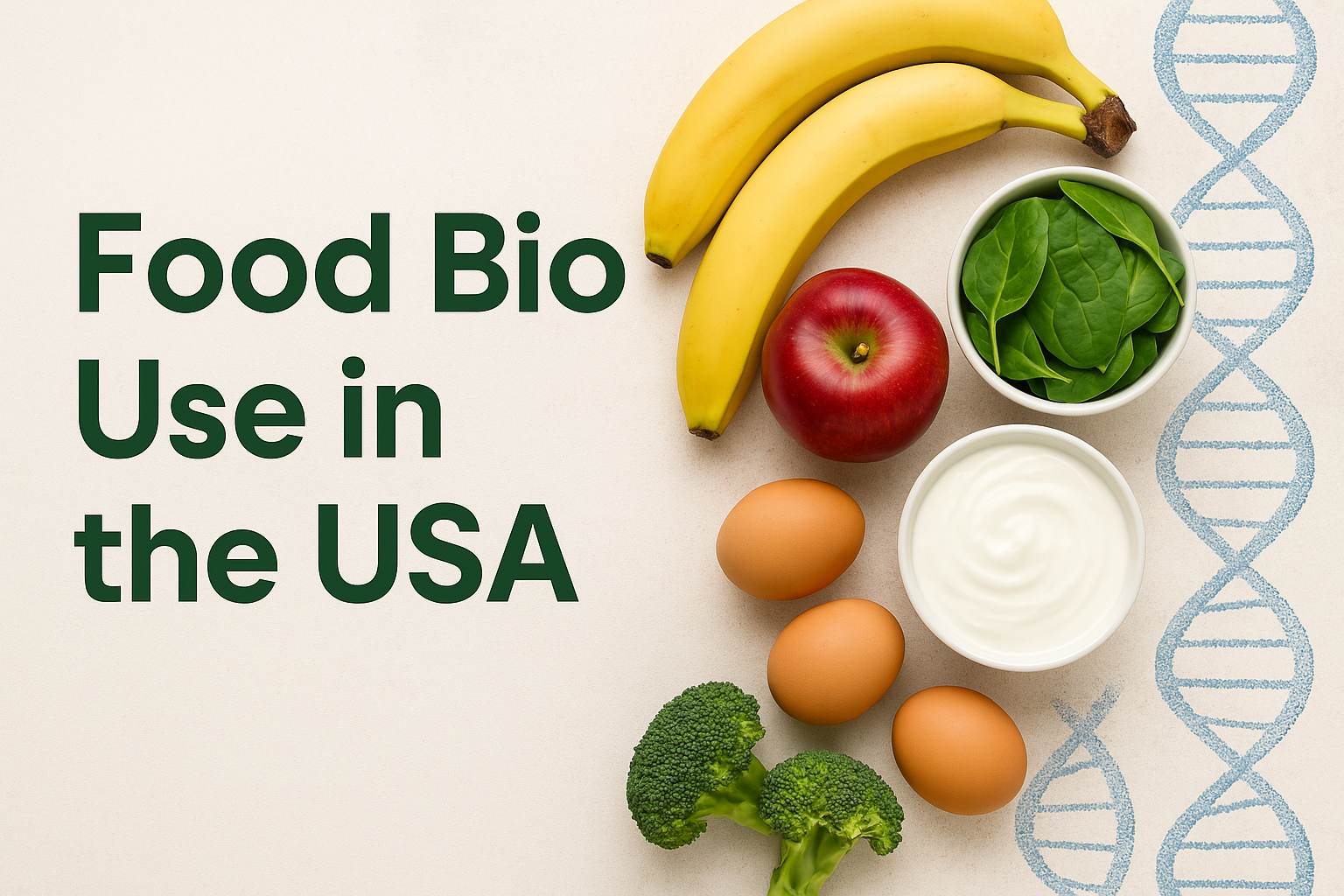
Top-selling organic products include:
- Bananas
- Apples
- Milk
- Eggs
- Spinach
- Yogurt
- Baby food
6. Role of Government and Regulation
USDA Organic Certification
To carry the “USDA Organic” seal, food must:
- Contain at least 95% organic ingredients
- Follow certified farming and processing practices
- Pass annual inspections
GMO and Bioengineered Labeling
Since 2022, U.S. law requires bioengineered food disclosure using:
- Text label
- QR code
- Digital accompanying data
This increases transparency but remains controversial among consumers.
7. Challenges Facing Bio Food in the USA
1. High Cost
Organic food can be 30%–70% more expensive than conventional food due to:
- Labor-intensive farming
- Lower crop yields
- Certification costs
This limits access for low-income families.
2. Supply Chain Limitations
- Organic feed shortages
- Transportation costs
- Limited processing facilities
These constraints affect pricing and availability.
3. Consumer Confusion
Many consumers struggle to differentiate between:
- “Organic”
- “Natural”
- “Non-GMO”
- “Eco-friendly”
Marketing claims sometimes mislead the public.
4. Scientific Debate Over GMOs
While most scientific bodies confirm GMO safety, public mistrust remains strong.
8. Bio Food and Public Health
Nutrition and Disease Prevention
Studies suggest organic food is associated with:
- Lower pesticide exposure
- Reduced risk of obesity
- Better gut microbiota
However, nutrition still depends more on overall diet quality than organic status alone.
Childhood Health
Parents prefer organic food for infants due to:
- Developing immune systems
- Reduced chemical exposure
- Lower heavy metal intake
Organic baby food is one of the fastest-growing segments.
9. Bio Food and Sustainability Goals
Bio food aligns closely with U.S. sustainability objectives:
- Carbon emission reduction
- Regenerative agriculture
- Water conservation
- Waste reduction
Many climate policy programs now include organic farming as a key solution.
10. Technology and Innovation in Bio Food
Technology is transforming bio food through:
- AI-driven organic crop monitoring
- Precision irrigation
- Bio-fertilizers
- Natural pest control with microorganisms
- Blockchain food traceability
These innovations reduce waste while increasing yields.
11. Bio Food and Global Trade
The USA is:
- A major exporter of biotech crops
- A leading importer of organic produce
Key trading partners include:
- Canada
- Mexico
- European Union
- China
Global demand for FDA- and USDA-certified products strengthens U.S. agricultural leadership.
12. The Future of Bio Food in the USA
Expected Trends
- Growth of regenerative organic farming
- Expansion of plant-based bio foods
- Lower prices through technological efficiency
- Stronger environmental regulations
- Personalized nutrition based on bio food
Consumer Behavior Evolution
Future consumers will prioritize:
- Climate impact
- Ethical sourcing
- Nutritional personalization
- Functional foods (immune, brain, metabolism)
13. Bio Food vs Conventional Food: A Balanced View
| Category | Bio Food | Conventional Food |
|---|---|---|
| Chemical use | Minimal | High |
| Environmental impact | Low | Higher |
| Price | High | Affordable |
| Yield | Moderate | High |
| Regulation | Strict | Standard |
Both systems play essential roles in U.S. food security.
Conclusion
Bio food in the United States represents far more than a health trend. It reflects a fundamental transformation in consumer values, agricultural practices, sustainability efforts, and scientific innovation. Organic food speaks to environmental responsibility and personal health, while biotechnology addresses global hunger and productivity.
As access expands and prices stabilize, bio food will move from premium choice to mainstream necessity. The future of American food lies not in choosing between organic and biotech, but in integrating sustainability, science, and nutrition into one resilient food system.
The United States, as a global agricultural leader, stands at the center of this transformation—shaping not only how Americans eat, but how the world feeds itself.